LawFirm.com Publishes an Interview With Ricky LeBlanc on Appealing Long-Term Disability Denials
PR Newswire
CHESTNUT HILL, Mass., June 16, 2026
CHESTNUT HILL, Mass., June 16, 2026 /PRNewswire/ -- LawFirm.com has published a new interview with Ricky LeBlanc, a disability insurance bad faith lawyer and managing attorney at Sokolove Law, outlining what claimants should understand after a long-term disability (LTD) denial and how the appeals process can differ depending on the type of policy involved.
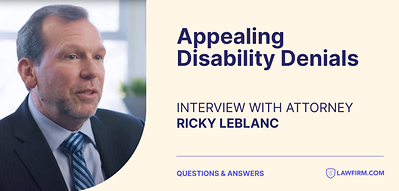
The interview addresses common reasons insurers cite for denials, potential signs of "bad faith" conduct, and steps claimants may consider to protect deadlines and documentation.
Long-term disability insurance is intended to replace income when illness or injury prevents someone from working, but denials can leave policyholders facing immediate uncertainty about next steps.
Claimants may be navigating treatment decisions while also confronting administrative requirements such as denial letters, medical record requests, and strict appeal timelines. The interview is framed as an informational guide for readers trying to understand how insurers evaluate disability claims and how an appeal is built.
LeBlanc said the reasons for denials often follow recognizable patterns. "Sometimes they'll say there isn't enough medical evidence or that your condition doesn't meet their definition of 'disability,'" he said. He added that insurers may also cite missed deadlines, paperwork errors, or pre-existing condition clauses, and that some denials rely on independent medical reviewers who never actually examine the claimant.
The interview also explains the concept of "bad faith," an industry term used when an insurer is alleged to have handled a claim unfairly. LeBlanc described it in plain terms, saying, "Bad faith basically means the insurance company isn't playing fair," and noting that insurers have a duty to handle claims in good faith. He pointed to warning signs such as "long, unexplained delays," "vague or shifting reasons for denial," and requests for extensive paperwork even after a claimant believes they have provided adequate proof of disability.
A central theme of the conversation is that the denial letter often sets the roadmap for what happens next. "First, carefully read the denial letter," LeBlanc said. "It should tell you why the insurer rejected your claim and the deadline that applies for appealing."
He emphasized that building an appeal usually requires assembling policy documents, claim file materials, updated medical records, and work history in a way that addresses the insurer's stated reasoning.
The interview also highlights why timelines can become a defining issue. LeBlanc noted that many claimants only have 180 days from the date they receive the denial letter to file an appeal, while adding that the rule is not universal.
If coverage is tied to employment, the policy may be governed by the Employee Retirement Income Security Act (ERISA), a federal framework that sets rules for how claims and appeals are handled and can limit the legal remedies available in certain disputes.
LeBlanc cautioned that missing an appeal deadline can have significant consequences, explaining that missing it can mean losing your right to challenge their denial.
Another topic addressed is whether claimants can handle appeals alone. LeBlanc acknowledged that it may be possible, but warned that the process can be difficult while someone is dealing with a serious condition.
"Insurance companies have teams of lawyers and specialists working to protect their interests," he said, adding that without experienced help, claimants may be at a serious disadvantage. He also noted that the strength of an appeal often depends on evidence that connects medical limitations to job duties, such as doctors' statements, medical evaluations, and, when appropriate, vocational input.
The interview further distinguishes between internal appeals and the possibility of litigation in certain circumstances. LeBlanc said potential legal options can depend on whether the policy is employer-sponsored and ERISA-governed or privately purchased, with different rules affecting what claims can be brought and what damages may be available.
He added that in non-ERISA situations, a bad-faith lawsuit may be an option if the insurer acted unreasonably or intentionally withheld benefits, though outcomes are case-specific.
LawFirm.com said the interview is part of its broader coverage of disability insurance disputes and consumer legal issues that can be difficult for the public to navigate without clear explanations. The full Q&A is available through LawFirm.com.
LawFirm.com
1330 Boylston St Suite #400, Chestnut Hill, MA 02467
(888) 726-9160
LegalNews@lawfirm.com
LawFirm.com is an online legal resource that provides information about lawsuits, dangerous products, and personal injury topics such as mesothelioma, defective drugs, and consumer safety issues. The site offers educational guides, legal news, and tools that help people understand their legal rights.
 View original content to download multimedia:https://www.prnewswire.com/news-releases/lawfirmcom-publishes-an-interview-with-ricky-leblanc-on-appealing-long-term-disability-denials-302802140.html
SOURCE LawFirm.com

